Property management is a complex web of workflows. People are relocating, reclaiming their deposits, and trying to fix the AC during a heatwave. It’s a detailed dance of interconnected steps, carried out by busy professionals striving to meet deadlines. One of my main projects at Mynd was to transition our prop-tech platform from an outdated task-based approach used by hundreds of employees to modular, customizable workflows.
The core function of a proptech startup is leveraging technology, automation, and optimization to boost efficiency and achieve scalability. As Mynd expanded, doubling annually, the existing tools for managing our internal operations reached their limits.
One of my first major projects as a newly appointed Director of Design was to evaluate how work was conducted at Mynd and assist in designing a truly scalable platform for tech-enabled property management. I named this product the Workflow Engine.
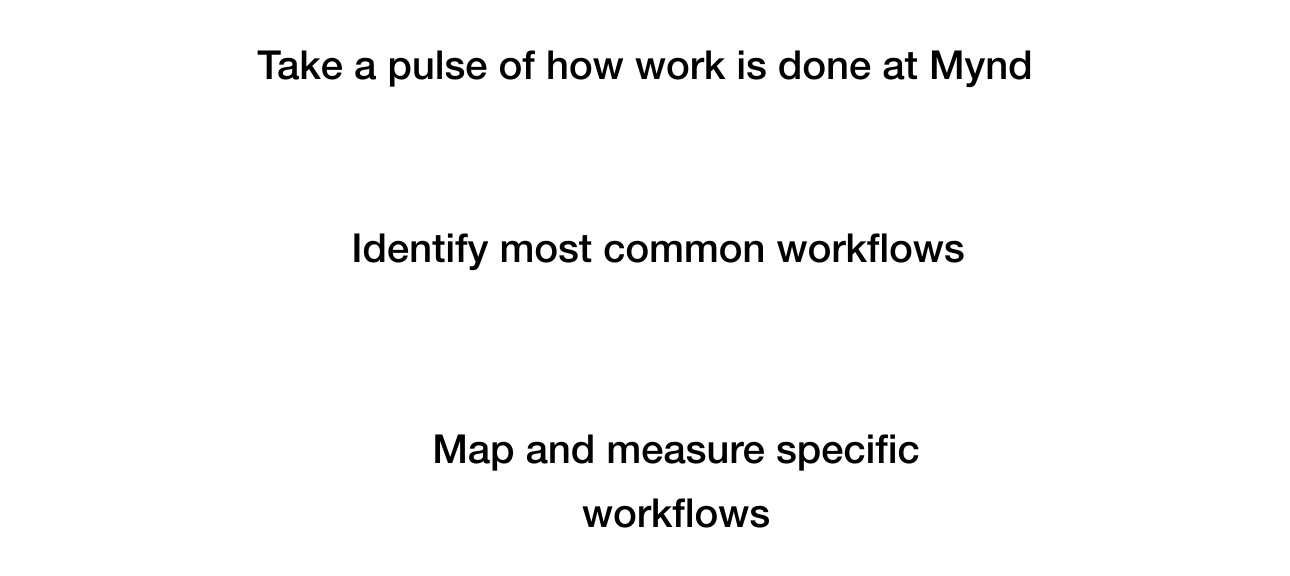
The primary goals of the Workflow Engine discovery
To gain insights into how work was conducted at Mynd and identify areas for improvement, I collaborated with our VP of Product to facilitate an extensive discovery effort. The approach was twofold:
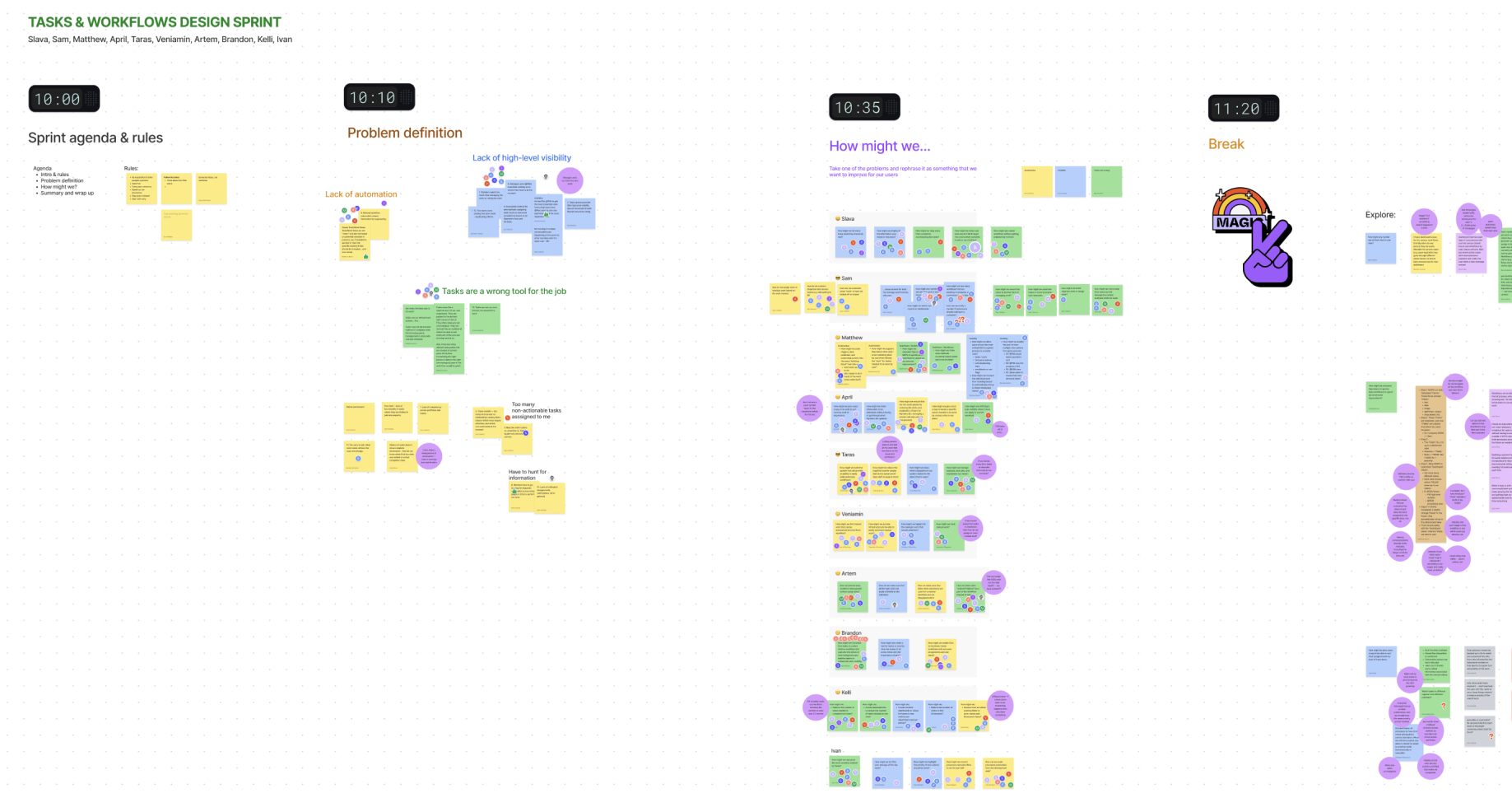
Over several days, I facilitated multiple design sprints with our stakeholders in upper management, business, engineering, and operations. We defined the problems, brainstormed solutions, and explored promising opportunities, ensuring every part of the organization was heard.
After analyzing and summarizing the top-down research, it was time to delve deeper by spending weeks shadowing and recording actual operators at work.
To understand where our users spent their time and identify opportunities to optimize their day, we conducted an in-depth research study:
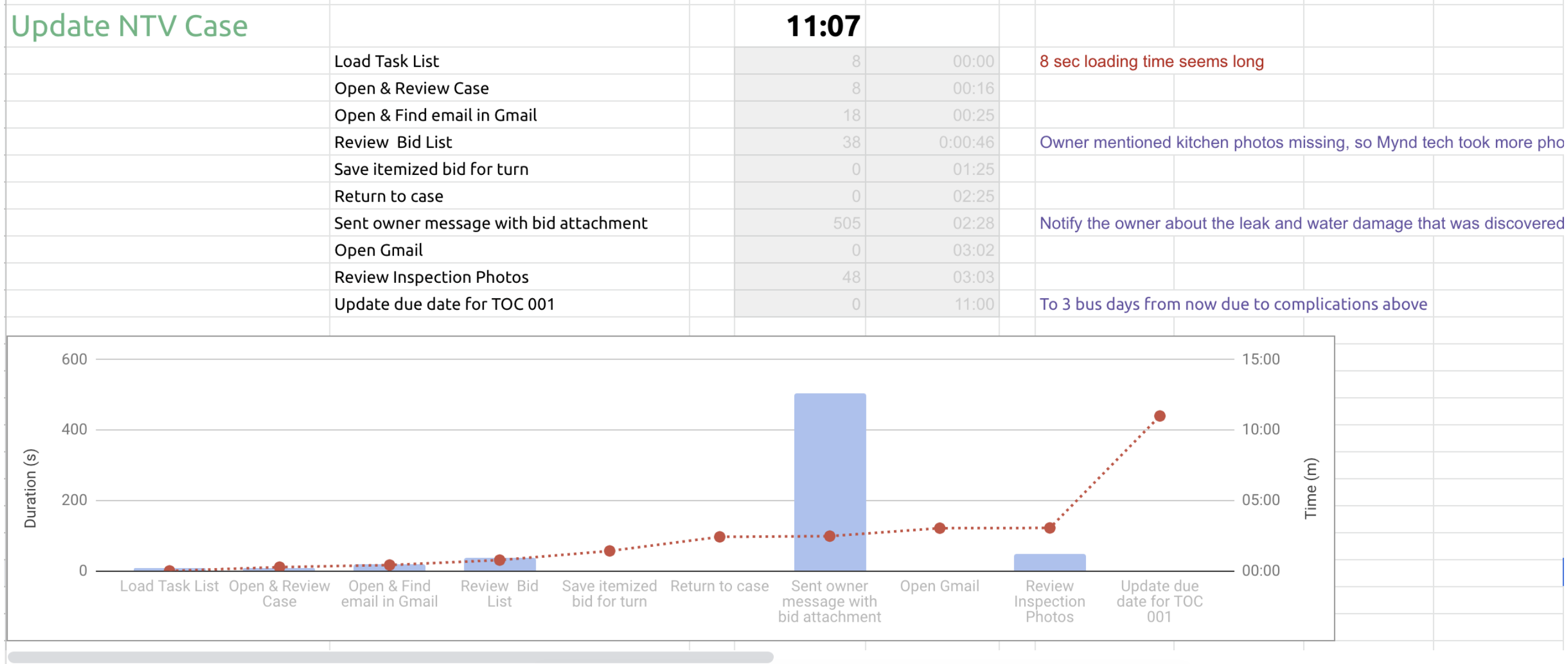
Analysis of time spent on tasks involved in a Resident Move-out (NTV)
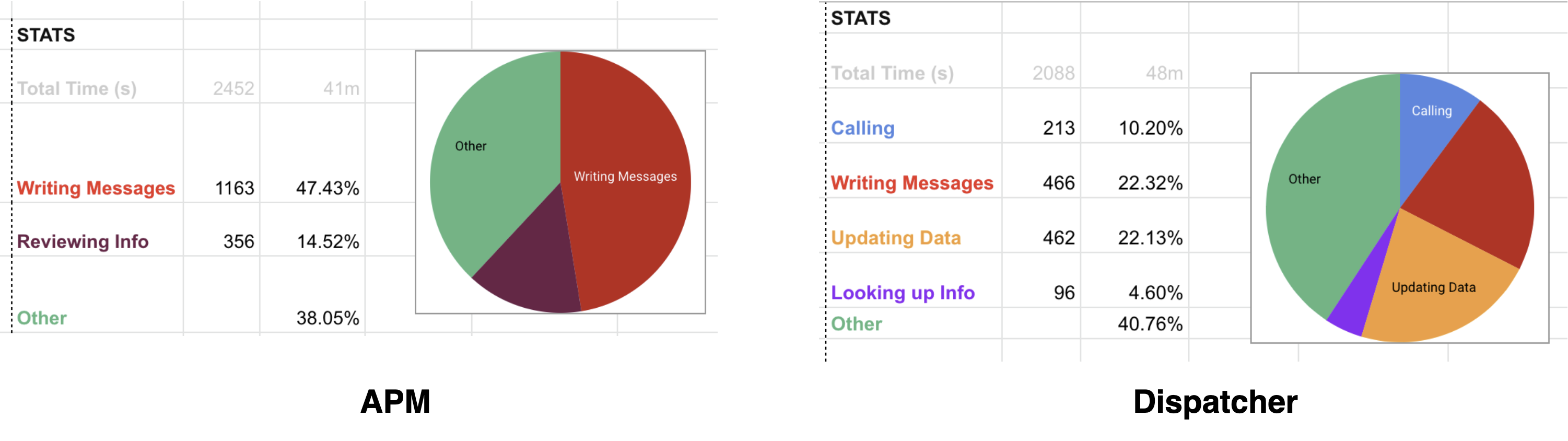
An aggregate view of what Associate Property Managers and Dispatchers spend their days doing
After thoroughly analyzing the research, I pinpointed the primary pain points that required attention:
Lack of automation of repeating task
Too many clicks to find basic information
Hard to identify who is blocking progress
Lack of high-level visibility for managers
My to-dos are full of tasks that I can’t do yet
Tasks are in a different place from where the work needs to be done
Observing our users face consistent challenges regardless of their roles or tasks, it became evident that we needed to rethink our approach to work at Mynd. It was essential to transition from an unsustainable task-based system to a design that supports automated workflows.
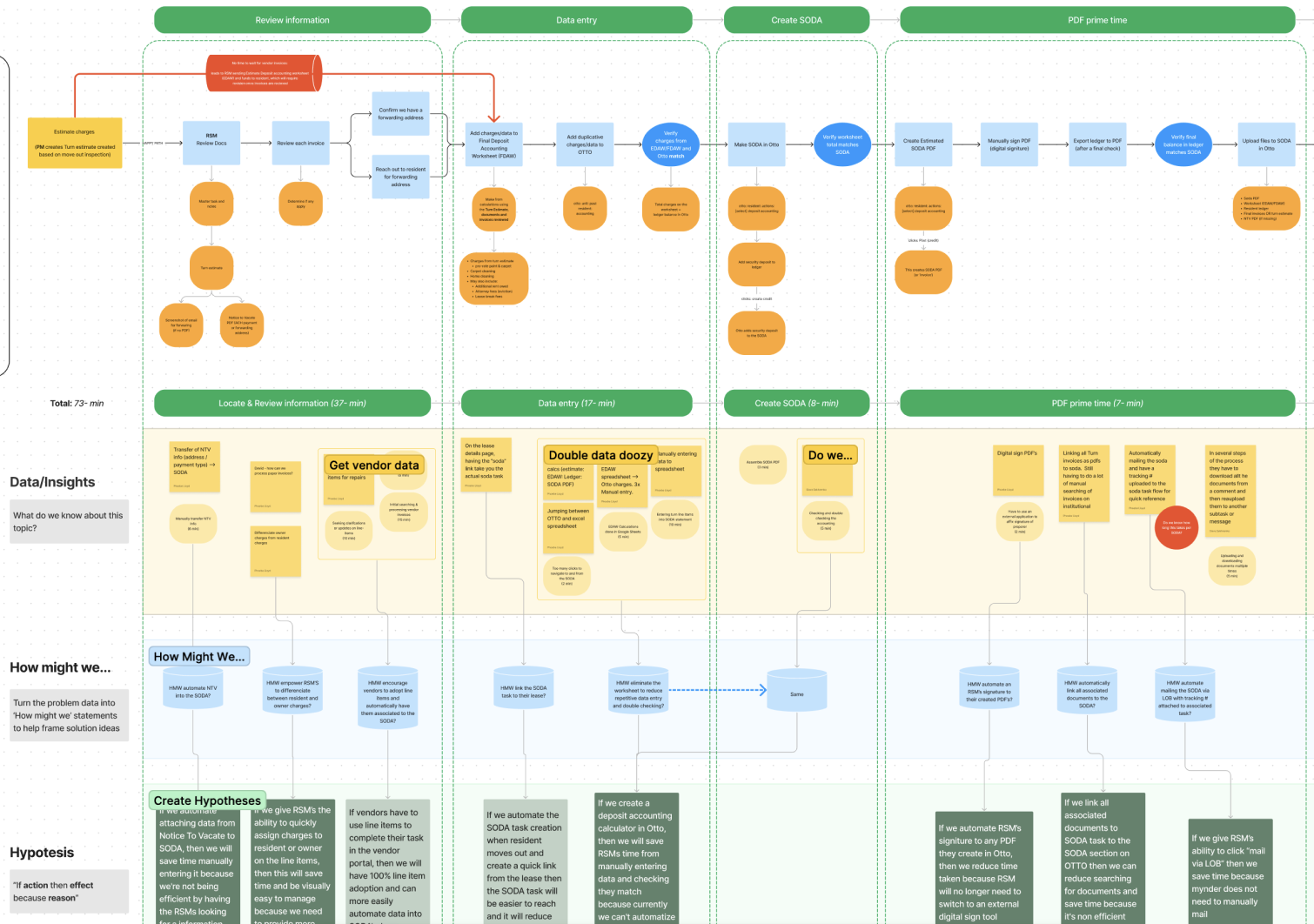
Mapping out the Deposit Accounting workflow
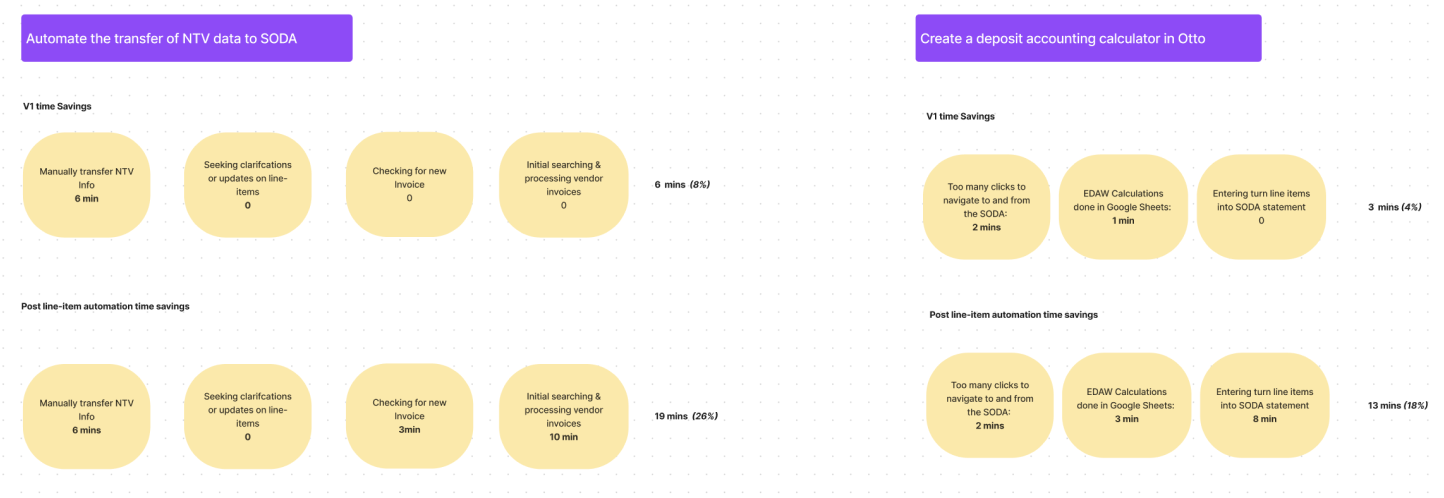
By adding up all the potential efficiency gains by moving the work into a Workflow Engine, I arrived at the following estimates in reducing Cycle Time:
Phase 1:
-18%
V1:
-48%
The design of the Workflow Engine was driven by a unified vision, which eventually became the Vision Statement for the entire design team:
A product should clearly indicate the next steps and equip you with all necessary tools to accomplish them.
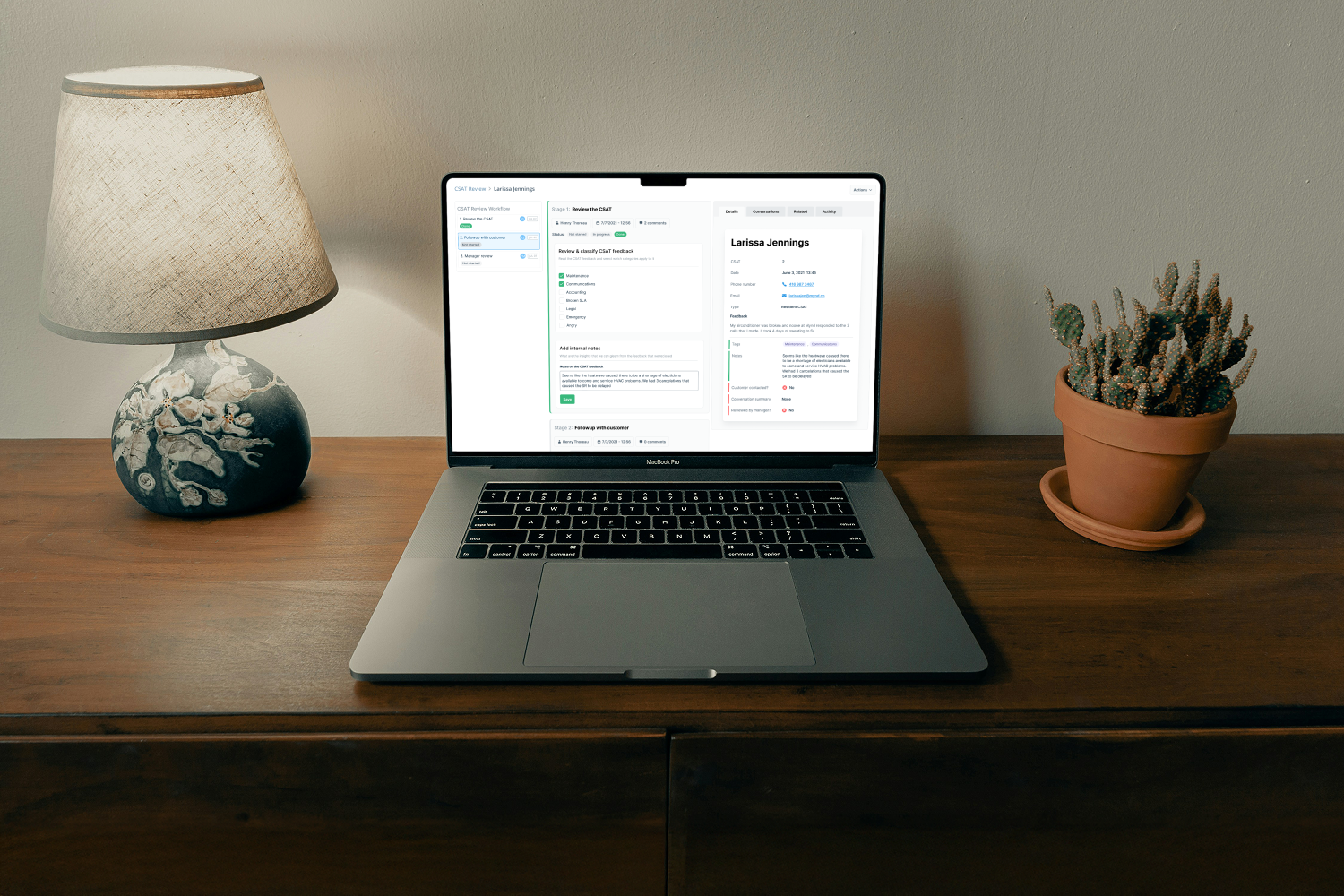
And here's how that vision manifested in the UI:
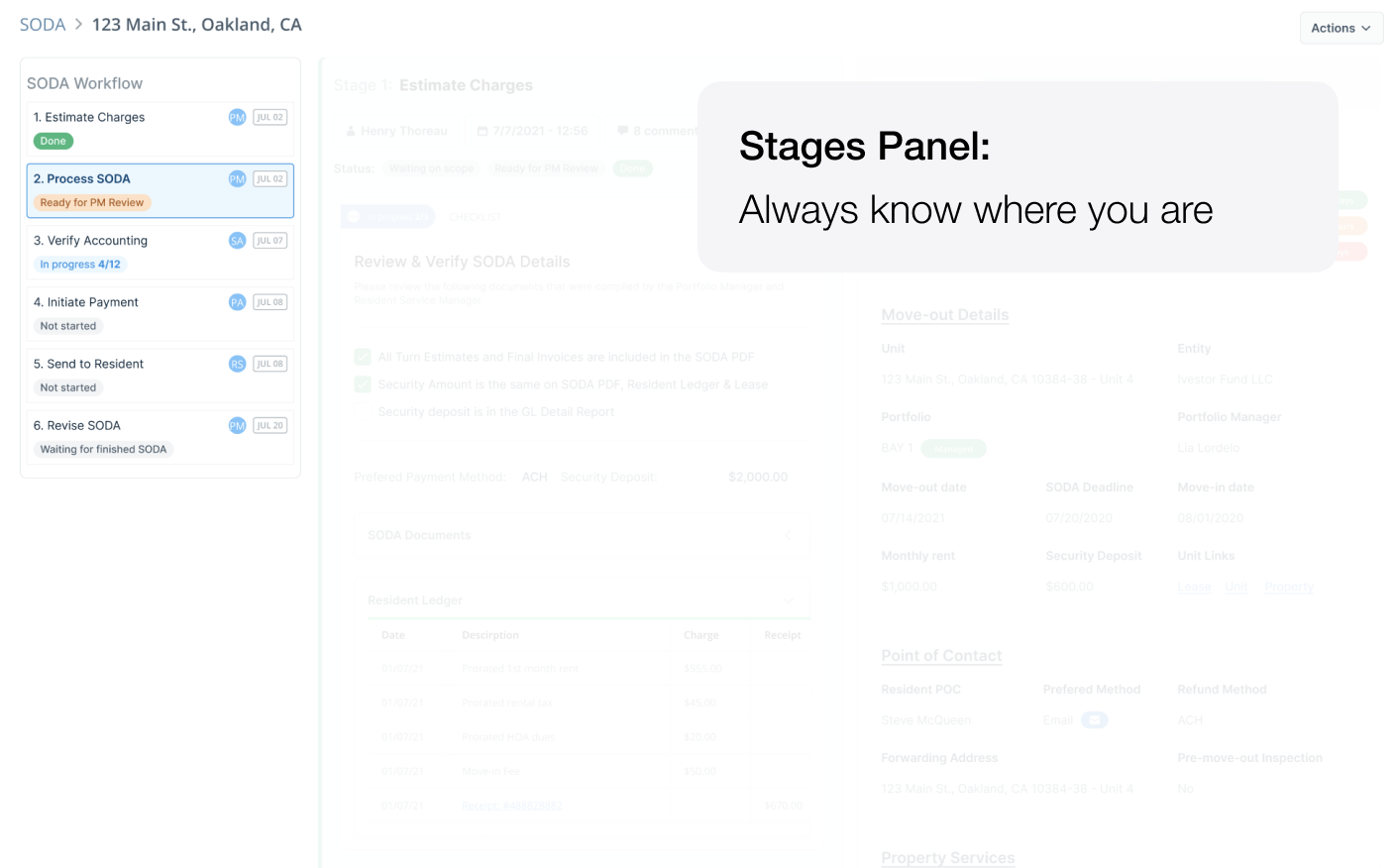
Stages Panel: The left sidebar shows the full SODA workflow as a sequential checklist. Each stage has a status (Done, In Progress, Not Started), an assigned role, and a target date. This gives the user a clear sense of progress and who owns what next (or help identify who’s blocking progress.)
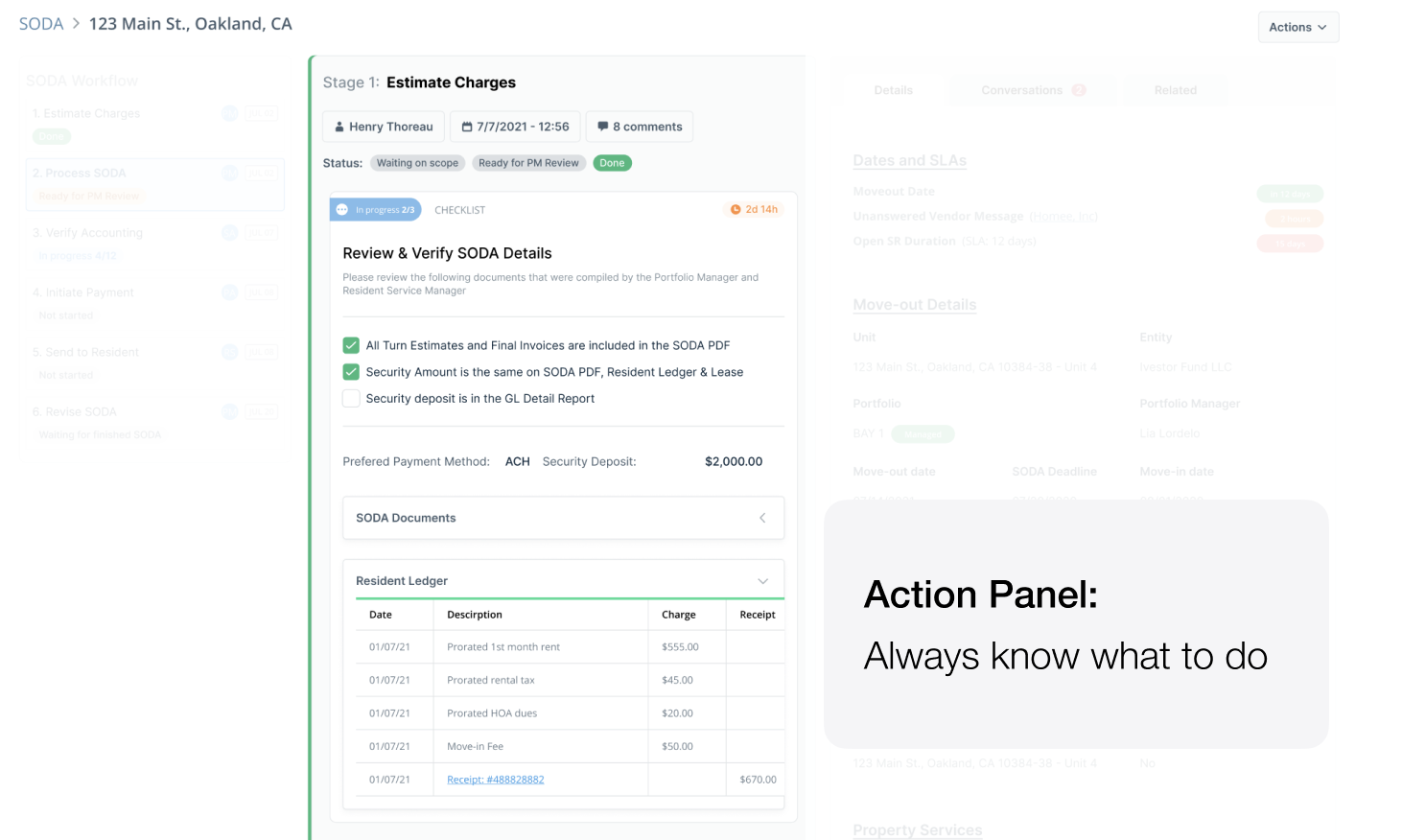
Action Panel: The center view shows the active stage’s tasks: a verification checklist, financial details, and the resident ledger. Instead of hunting across systems for what needs to happen, the user sees exactly what to review and complete right here. This directly addresses the pain point of tasks living in a different place from where the work gets done.
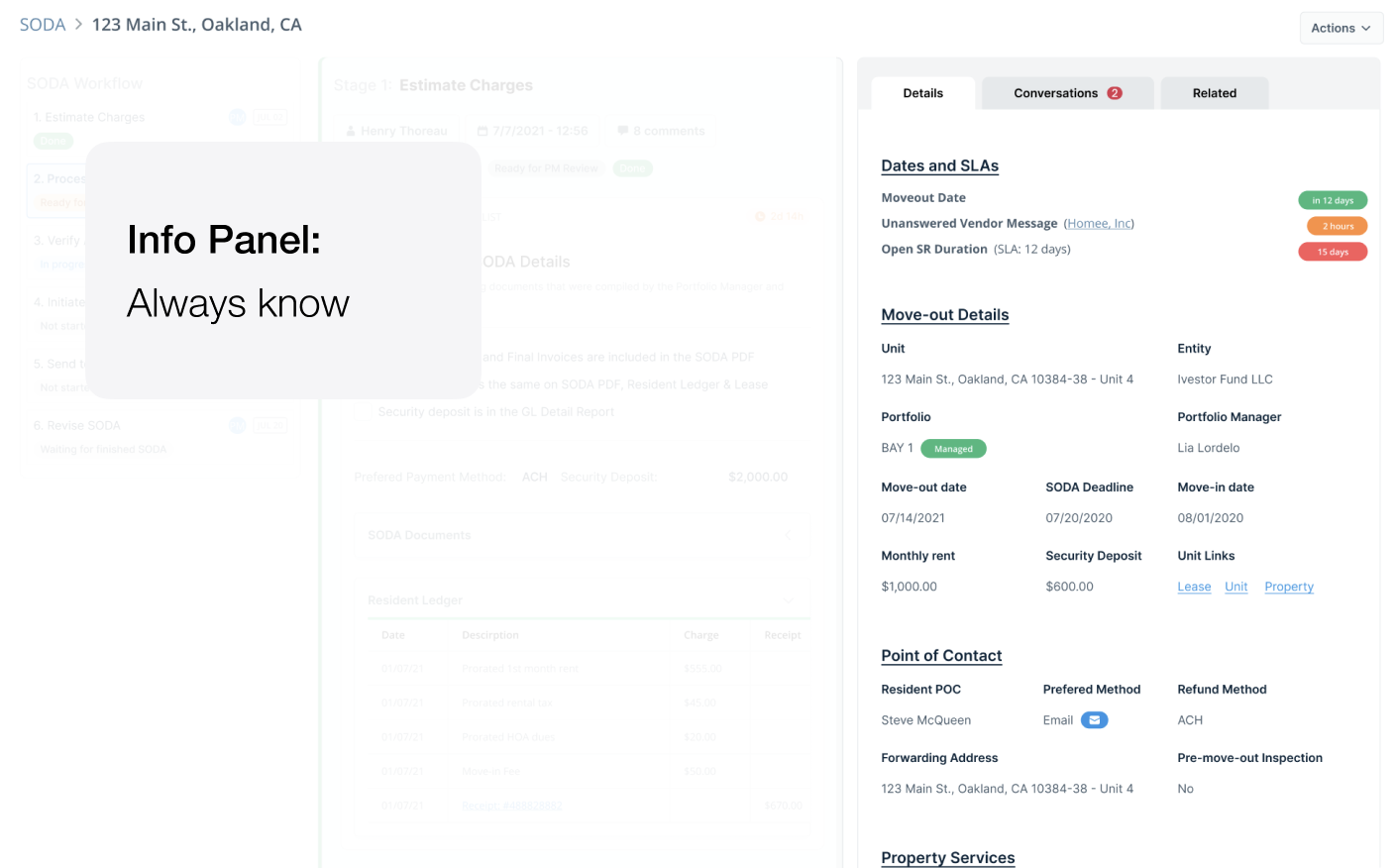
Info Panel: The right sidebar surfaces all contextual details: move-out dates, SLA timers (with color-coded urgency), property info, contact details, and lease links. This eliminates the “too many clicks to find basic information” problem — everything an operator needs to make a decision is visible without navigating away.
Explore the interactive prototype:
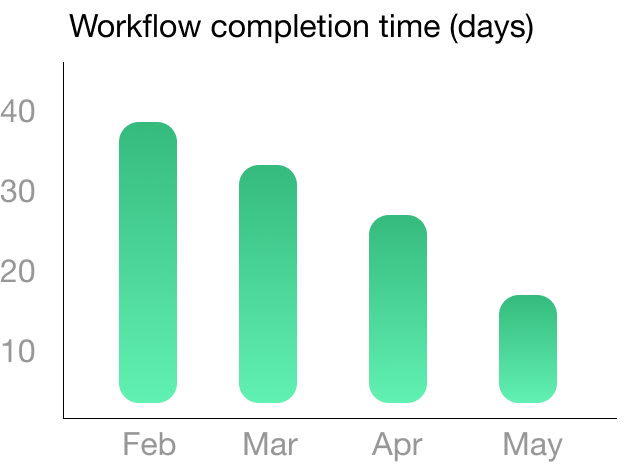
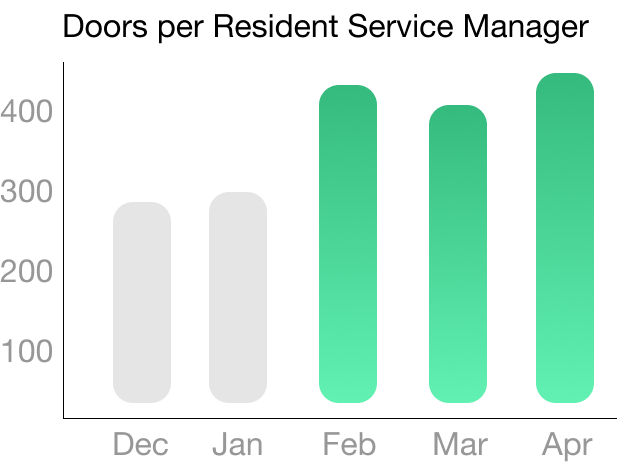
The Workflow Engine cut average workflow completion time by 58% (from 38 days down to 16) while enabling each Resident Service Manager to handle 28% more homes (325 to 415). The results justified a dedicated Workflow Team of five, and within the first year, eight major internal processes were converted to automated workflows.
38 → 16
-58%
Average days to complete a workflow
325 → 415
+28%
Homes per Resident Service Manager
0 → 5
A Workflow Team of 5 was funded to build workflows
8
Major internal processes converted to workflows in 1st year